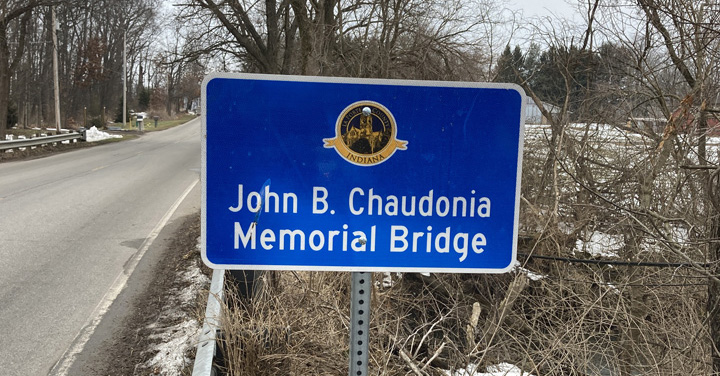
Jean Baptiste Chandonnai is mentioned in several Midwest history books and a footnote in several more. Most stories portray him as a hero who honorably served the United States and claim he was the nephew of Chief Topinabee. LaPorte County, Indiana, named a bridge after him. However, those histories failed to dive deep into records and relied on a few unreliable sources. Nearly all of them contain false information. When we examine multiple first-hand sources and refrain from whitewashing history, we discover a darker, more complex character. Chandonnai’s story provides a glimpse into the relationship between Native Americans, white settlers, and the will of the United States government. Read More
Tag: Trail of Death
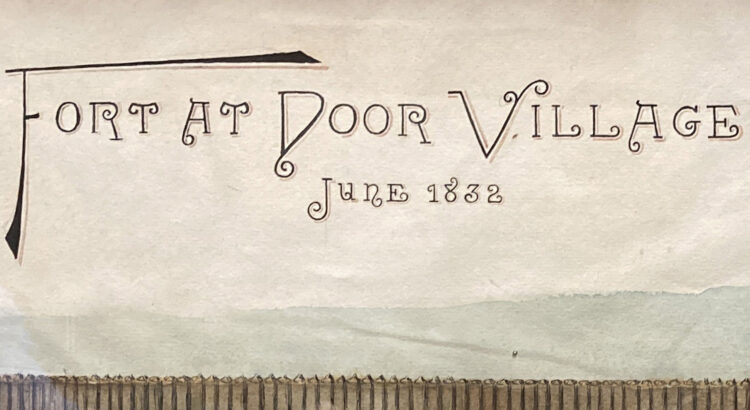
Door Village Fort – the story behind the story
In LaPorte County, Indiana, there is a giant granite rock with bronze plaques on two sides dedicated to the Door Village Fort. As the story went, Chief Black Hawk was on the warpath, he and his warriors were murdering white settlers, and headed toward LaPorte. In response, noble pioneers banded together and constructed a fort in just three days to protect the good people from the marauders. Local children learned that story for a century. However, Black Hawk was not headed toward Indiana or murdering innocent settlers. The fort arose from a panic based on misinformation and hatred of Native American people.1Wyman, Mark. The Wisconsin Frontier (Bloomington: Indiana University Press, 1998), 146. “The outbreak was created from many strands, including white pressure on lands, and Indian resistance; tribal divisions, and strife between tribes. But the major cause of the Black Hawk War was the long-term buildup of fear and hatred between Indians and whites along the Mississippi.” (Click superscript numbers to view interesting notes) That panic launched the Black Hawk War, an ugly stain on American history. Read More
NOTES
- 1Wyman, Mark. The Wisconsin Frontier (Bloomington: Indiana University Press, 1998), 146. “The outbreak was created from many strands, including white pressure on lands, and Indian resistance; tribal divisions, and strife between tribes. But the major cause of the Black Hawk War was the long-term buildup of fear and hatred between Indians and whites along the Mississippi.” ↩︎